Planning for Stability in an Unpredictable Funding Environment
When Jennifer Pearson became Executive Director of the Tuscaloosa Public Library, she stepped into leadership of a system serving one of the largest counties in Alabama—geographically larger than the state of Rhode Island. The service area includes a wide range of communities, from the City of Tuscaloosa and the City of Northport to small rural towns, a coal-mining area, and neighborhoods shaped by deep historical roots in Alabama’s Black Belt region.
The county is also home to the University of Alabama, Stillman College, and a community college, creating a unique demographic mix. The library serves two public school systems—one city and one county—whose funding levels differ dramatically despite serving overlapping populations.
Layered on top of this complexity is Tuscaloosa Public Library’s unusual governance structure. The library is an independent district, separate from both city and county government. Each year, it must apply for funding from three separate entities: the City of Tuscaloosa, the City of Northport, and Tuscaloosa County. The result is an ongoing uncertainty that affects everything from staffing to long-term service planning.
“Every year, we don’t know how much money we’re going to receive,” Pearson explained. “That creates its own set of issues.”
Why Strategic Planning Was Needed
ReThinking Libraries (RTL) first worked with Tuscaloosa Public Library in 2021, initially brought in to assess a possible facility relocation. At the time, the city was exploring whether the library could move into the newly developed Saban Center, a high-profile downtown project.
RTL’s analysis suggested a more nuanced approach: relocating only the children’s department to the new facility while keeping the main library in place. Although that recommendation was ultimately not implemented, Pearson notes that the findings were still highly useful and continued to inform internal discussions.
In 2022, following a successful grant application, RTL returned to lead a full strategic planning process. The timing proved critical. Midway through planning, the library learned it would receive only level funding for the coming year, forcing immediate operational adjustments.
Addressing Core Challenges: Funding and Staffing
Two major challenges emerged during the planning process: funding inequities and staffing shortages.
RTL conducted a detailed peer analysis, grouping Tuscaloosa with libraries serving similar populations across five cohorts—statewide peers, southeastern libraries, regional systems, other SEC college communities, and nationally recognized “star” libraries. The results were stark. On a per-capita basis, Tuscaloosa Public Library was the lowest-funded library across nearly all comparison groups, including within Alabama. Peer institutions serving similar university communities were funded at significantly higher levels.
Staffing levels reflected those disparities. For a county of its size and complexity, the library was operating with extremely lean staffing, limiting service capacity and flexibility.
When level funding was confirmed, the library had to pivot quickly, reducing some services and adjusting staffing models while still trying to move forward strategically.
From Plan to Action
One of the most valuable outcomes of the planning process, according to Pearson, was the structure of the final plan itself.
Rather than a static document, the plan included a detailed project and program matrix—essentially a living spreadsheet that tracks goals, initiatives, timelines, and responsibilities. This approach allows the library to revisit and update priorities annually while maintaining measurable progress.
“I didn’t just put the strategic plan in a drawer,” Pearson said. “I use it constantly. I share it so much with stakeholders that it’s literally falling apart.”
The planning process also validated the library’s ability to implement best practices despite limited resources. That validation gave staff and leadership confidence to pursue operational changes that improved efficiency without compromising service.
Rethinking Service Delivery
Several tangible changes followed.
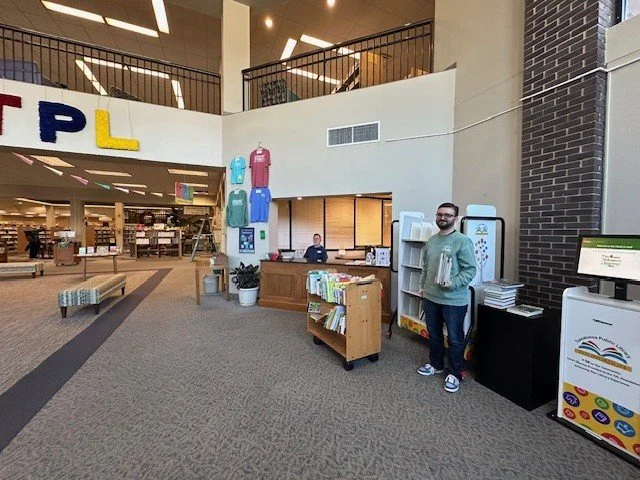
At the main library, the circulation area was reconfigured. A large traditional circulation desk was removed and replaced with self-check stations, significantly reducing the physical footprint of the service point. This allowed staff to be redeployed into other areas of the library while generating long-term cost savings.
Serving such a large county also prompted the library to rethink how and where services are delivered. With shifting population patterns, one branch was closed, but rather than abandoning the area entirely, the library installed a book vending machine. The response from the community has been overwhelmingly positive.
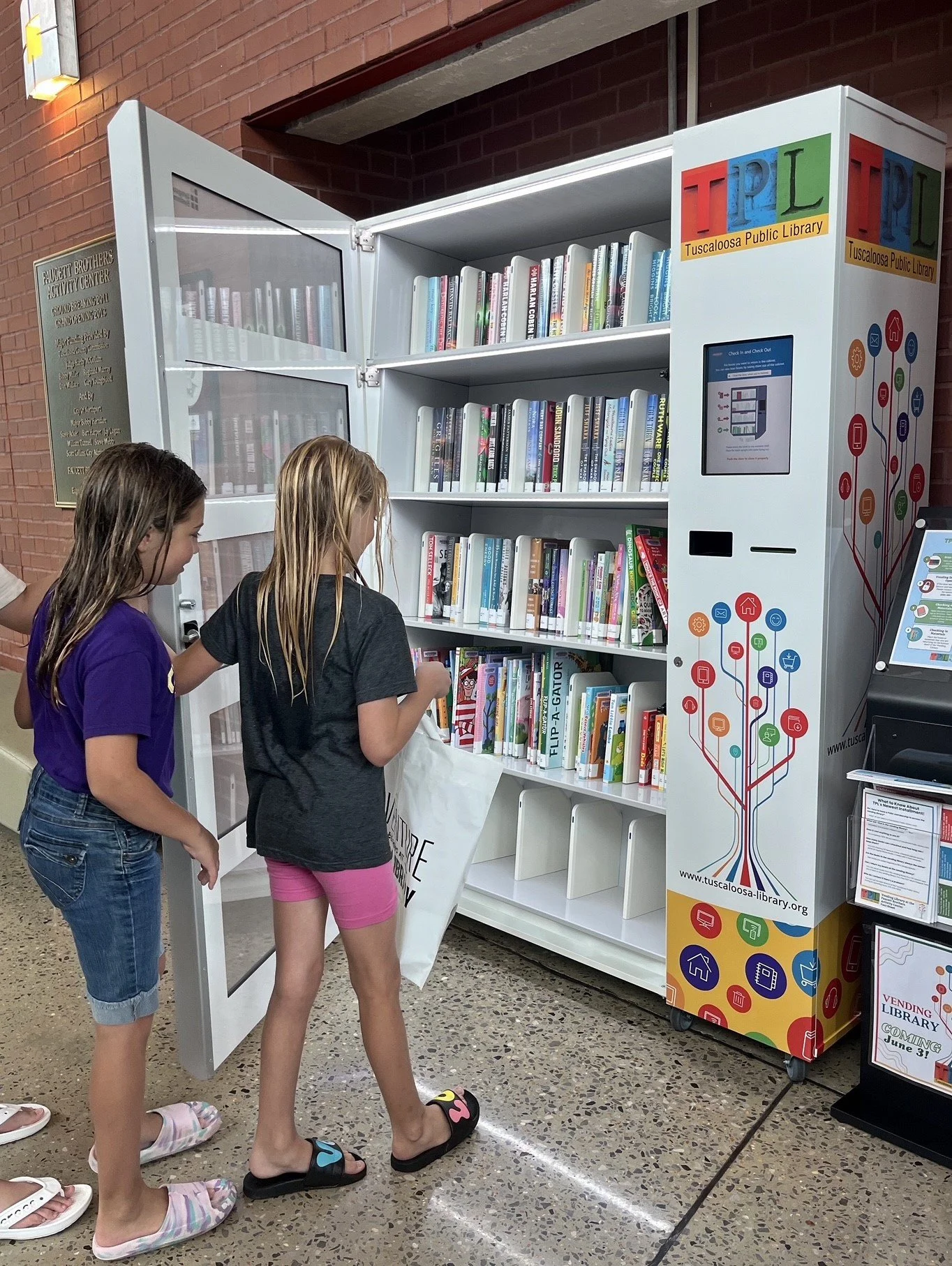
Today, Tuscaloosa Public Library operates four book vending machines across the county, providing access to materials in locations that would otherwise be underserved.
Looking ahead, the library is exploring funding for a technology-focused mobile unit. The proposed “tech mobile” would be equipped with computers and Wi-Fi, enabling mobile STEM programming for both children and adults. It would also support pop-up programs throughout the county, helping bridge access gaps—particularly in areas where a physical branch may not be the most effective solution.
Impact Beyond the Library
One of the most significant outcomes of RTL’s work was how it reshaped conversations with funders.
Using the comparative funding data gathered during the planning process, library leadership created a clear, evidence-based presentation for its three funding entities. The result was an increase in funding the following year, and—just as importantly—a more engaged and vocal library board.
Although funding has since returned to level status, Pearson sees long-term value in the groundwork that was laid.
“Our board members are more willing to speak up,” she said. “And elected officials are actually listening to our issues now.”
Recent elections mean those conversations will need to start again, but the library now has the data, structure, and shared understanding needed to advocate effectively.
The Value of an Honest Plan
Pearson has participated in multiple strategic planning processes throughout her career, but she describes this one differently.
“This was the most usable and honest plan I’ve ever had,” she said. “RTL took the time to really understand our funding dynamics and our community before offering recommendations.”
That emphasis on learning first—and tailoring guidance to local realities—made the plan practical rather than aspirational. It also made the process meaningful for staff, who gained clarity about priorities and constraints.
Looking Forward
Today, Tuscaloosa Public Library is continuing to build on that foundation. Recent facility assessments have already led to funding for critical infrastructure needs, including a new roof and plumbing repairs in the main building, originally constructed in 1976.
Pearson is particularly excited about expanding mobile and automated services—more book vending machines in additional communities and, ideally, the launch of the tech mobile with support from the library foundation.
In a county as large and diverse as Tuscaloosa, flexibility is essential. Through strategic planning grounded in data, realism, and community context, the library is positioning itself to adapt—year by year—even in the face of ongoing uncertainty.
